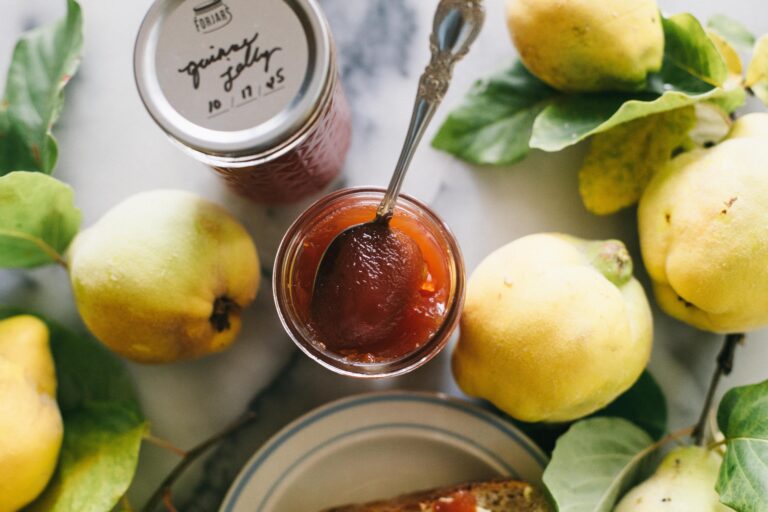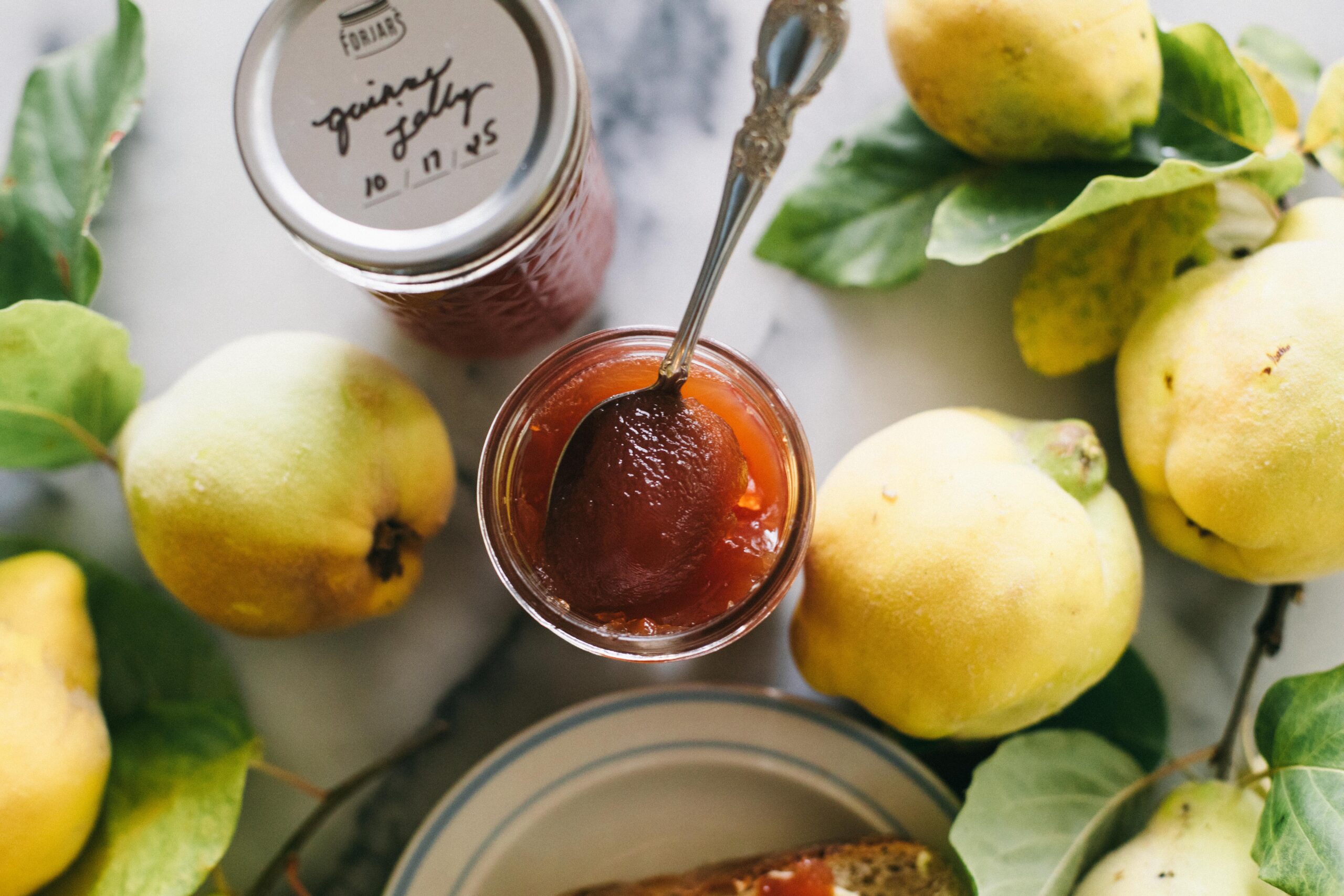
Quince Jelly: an apple and a rose had a baby
Quince. What even is that? What does it taste like? How do you eat it? And why in the world is it all fuzzy? We’re diving into all things quince in this blog post, so buckle up. And before we’re done, I’m sharing my signature Quince Jelly recipe, so you too can enjoy this weird, wonderful fruit.
I first met quince in the food world. In case you didn’t know, once upon a time I went to culinary school and worked in restaurants for a few years before starting my own catering company. Catering events in wineries and tasting rooms is where I first encountered the little-known fruit. Apparently quince, or quince paste– also called membrillo– pairs wonderfully with wine, cheese, and all the classic charcuterie accoutrement. So I was often working with quince in my job. I didn’t know where it came from, or how to find it, I just knew how to cook it.
What is a quince?
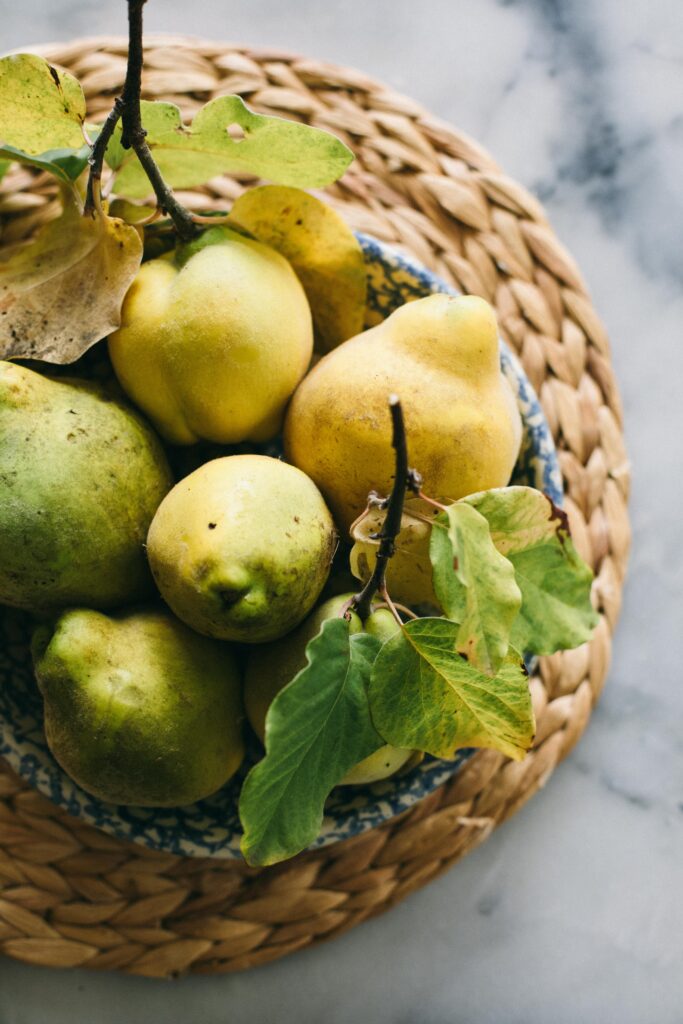
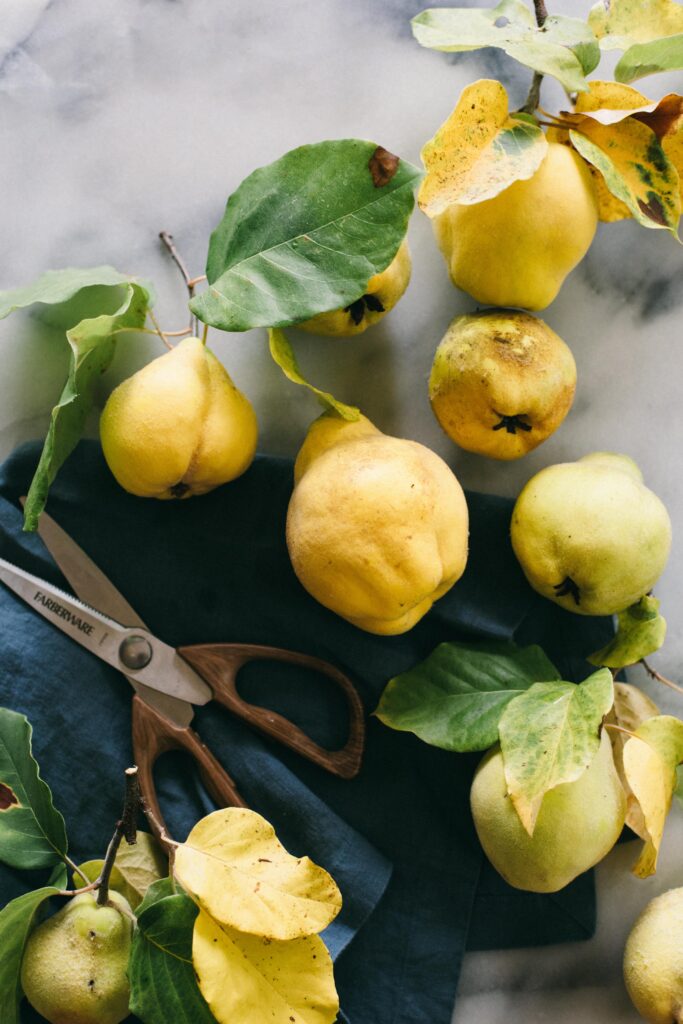
Quince is a hard, yellow, lumpy and fuzzy fruit. It has a very firm, somewhat mealy flesh that is too hard to be consumed raw. The skin isn’t overly thick, but feels tough, and has fuzz like a peach. When ripe, quince have the most powerful sweet and floral fragrance. Texturally, it’s kind of like an apple mixed with a pear. But fragrance wise, it’s as if an heirloom orchard apple and an English rose had a baby. A stop-you-in-your-tracks, assault your senses in the best possible way, transport you to Autumn in the English countryside, fragrance.
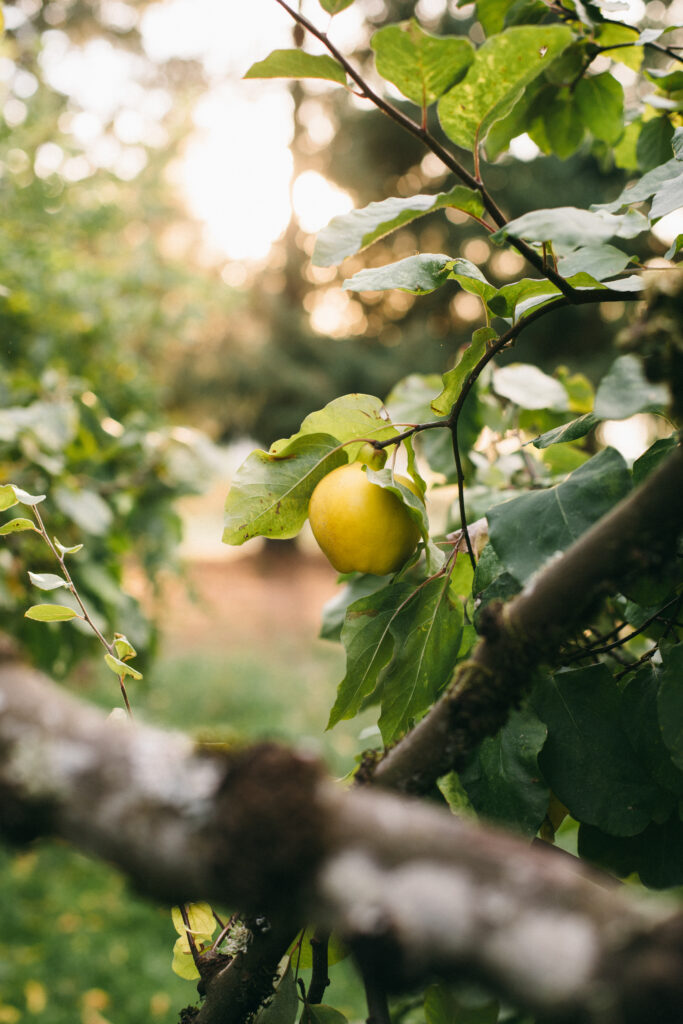
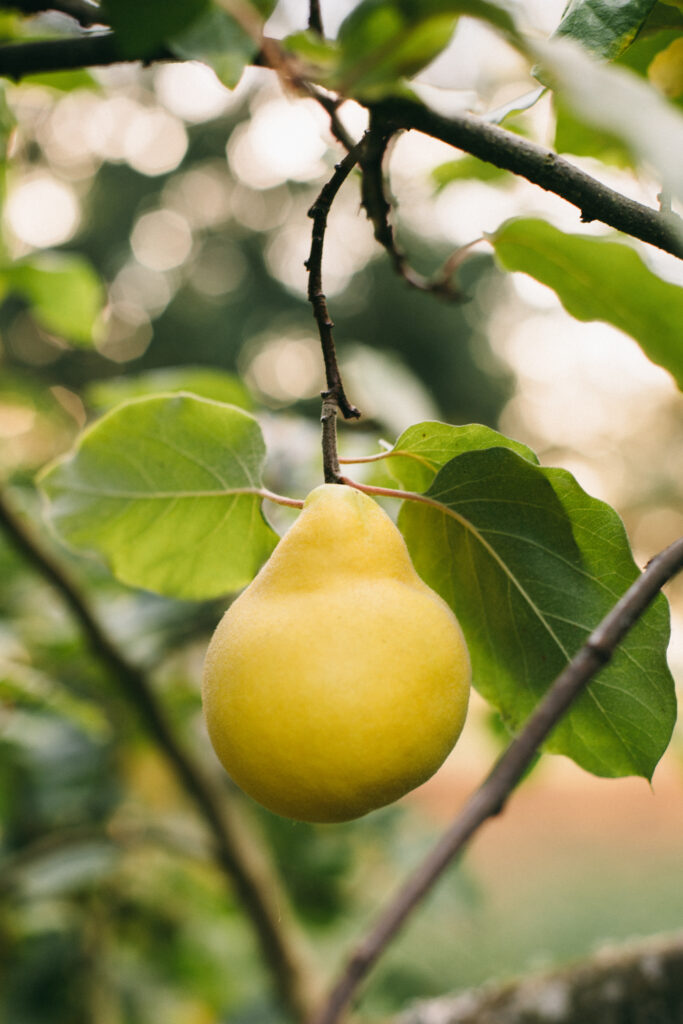
How does quince grow?
When we first visited our property six years ago, I was astounded by the unbelievable fragrance in the old, overgrown orchard. I assumed it was just some especially aromatic variety of apple, but the floral notes in that unforgettable smell left me wondering. Turns out, it was not one but two quince trees! I had no idea when we bought the house that the orchard would come complete with a year’s supply of quince, and I still can’t believe my luck. Quince are not exactly an everyday fruit.
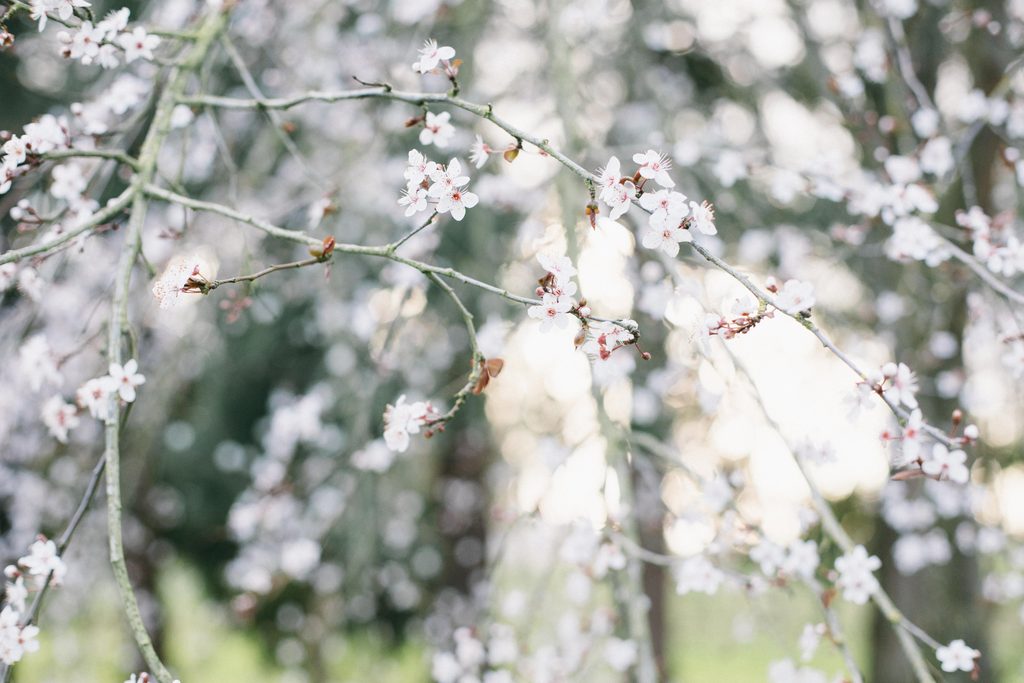
Quince grow on a tree just like an apple. Very similar actually. They also smell incredible, though only a shadow of the fruit to come. The tree blooms in late March or April, but the fruit doesn’t ripen til October, and then we can smell them from all over the property. Truly an arresting aroma.
Where can you can find quince?
Admittedly, as they are not the most common fruit, they can be somewhat hard to find. Here’s a few ideas for tracking them down:
- Try the Farmer’s Market. Surprisingly, though quince isn’t overly common, they grow all over the world. Check your local farmer’s market for growers of this delicious fruit, and if you don’t see them on display, ask the farmers! Chances are, even if they don’t grow them themselves, they might know somebody who has a tree or two.
- Specialty Grocers. Rarely do I darken the door of a specialty or ethnic food shop, but I wish I did more often! Eastern European and Latin American markets might have the quince, or quince products, you are searching for.
- Grow it yourself! If you have the space, plant a quince tree! Most trees are self-pollinating, so you only need one. They flower beautifully in the Spring, the blooms smell lovely, they ripen in October, and the fruit smells even better!
What does it taste like?
Like I said earlier, quince isn’t consumed raw. You can try, but it would be like eating a raw potato. In order to enjoy the beautiful flavor of quince, it must be properly cooked. And once it is, it truly has a flavor like no other. Sweet like an apple or pear. But floral like a rose, as I already mentioned. Rarely in life does something taste as good as it smells, or smell as good as it tastes, but quince does! My favorite way to enjoy quince is by making it into a jelly.
How do you use quince?
Though quince isn’t exactly a common, every day fruit, and they may even be hard to find sometimes, there are many delicious ways to use them in cooking and baking.
- In place of apples or pears. Quince can be stewed until tender in a simmering liquid, like you would do with a pear. Or baked into pies, crisps, crumbles, cakes or tarts, in place of an apple. I want to try this! On my to-do list this fall.
- With pork. Pork pairs beautifully with fruit. Don’t ask me why that is, but it’s true. Quince can be used in chutneys, or braised alongside a roast or tougher cut of meat, creating a delicious sauce and side.
- Make Membrillo. This quince paste is a very common item on a charcuterie board. Especially in Oregon’s wine country, which is where I first discovered it. Its sweet, floral flavor contrasts nicely with salty cheeses and crackers.
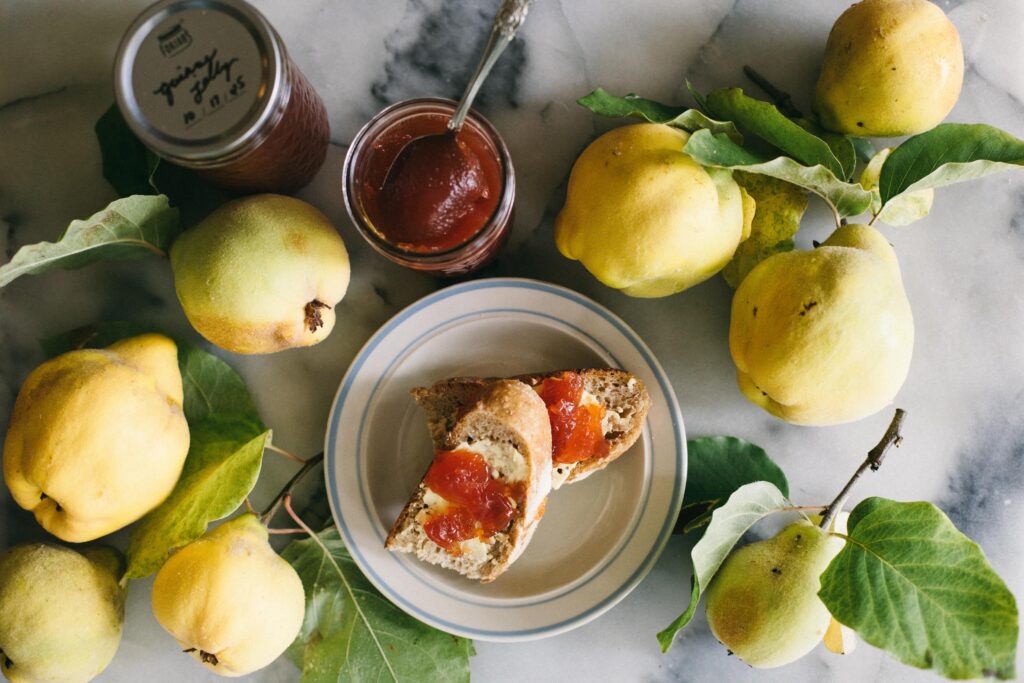
- Jelly. And last but not least, my personal favorite: make a rosy pink jelly for enjoying on English muffins, toast, sourdough bread, in shortbread cookies, on a grilled cheese, or as a spread on a charcuterie board. I will slather this stuff on anything remotely bread-like, or maybe even just eat it out of the jar. I won’t tell if you won’t.
Getting the juice from the quince for jelly
Making quince into juice to use for jelly is actually quite simple if you have the right tools. Here’s how I do it:
- First, wash the quince and then slice them into quarters. If they are really large, into eighths.
- Fill the bottom of the steam juicer with water and turn heat on low. Fill steam juicer basket with quince.
- Prepare a receptacle for the juice, which will come out of the steam juicer via a long tube. You can pinch off this tube with the included clip so it doesn’t spill everywhere. I like to use big jars for the receptacles, then I can just pop them in the fridge. Then, if I can’t get to the jelly right away, I don’t have to stress.
- Sit back, relax and let the steam juicer do the work! Just make sure you keep the bottom water section filled so it keeps steaming. Quince can take a little longer than say grapes, as they are more dense.
- Even once I’m done steam juicing, I’ll leave the quince in the steam basket to drain overnight. You’ll be surprised how much beautiful juice drains out. Chill your juice until you can make jelly, or get to it right away!
Equipment needed for making quince jelly
There’s nothing too fancy about making jelly, but it is necessary to have some basic canning supplies on hand. Here’s a few items that make this recipe a whole lot easier.
- Steam Juicer. This obviously isn’t absolutely necessary, you could easily cook the quince down in a regular pot and then strain the solids out to get just juice. But I have found the steam juicer to be way easier and prevent the scorching that happens so easily when simmering fruit on the stove.
- Water Bath Canner. Again, you don’t need this exact model, many people have a stove-top water bath canner and like it just fine. But I have found this electric one to be life changing. It doesn’t take up space on my stove, I can plug it in anywhere, and it stays warm, making the canning process go way faster. It’s also super easy to clean up and stores well.
- Pomona’s Pectin. Pomona’s Pectin is my go-to choice for jams and jellies of all kinds. It allows me to use less sweetener overall, and sub in the natural options I prefer. I also just think it tastes more natural and less artificial; less sickly sweet. Grab a 3-pack and stock up!
- Half-Pint Jelly Jars. Something about these crystal canning jars just screams jelly to me. It’s what my grandmas used, it’s what my mom used, it’s what I picture when I imagine popping open a fresh jar of jelly. A must. Plus the vibrant pink color looks so lovely in these!
My jelly recipe
I wish I could claim some secret family recipe that’s been passed down for generations, or that I’ve spent painstaking hours in the kitchen developing one, but alas, I have not. That would make for a great story, wouldn’t it? But really, it’s as simple as following the directions that come inside the Pomona’s Pectin box. Here’s my version of the recipe.
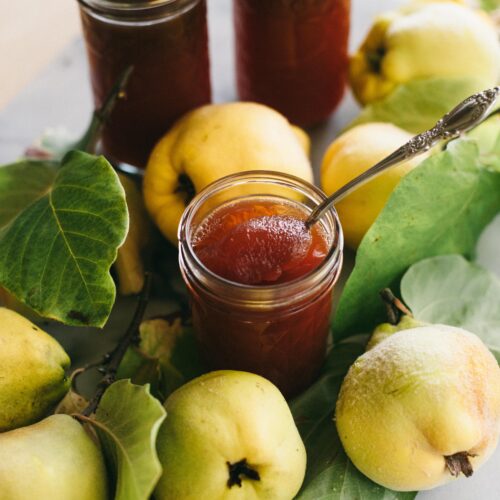
Quince Jelly
Equipment
- Steam Juicer
- Water Bath Canner
- Mason Jars + Lids I like half pint size for jelly
- Pomona's Pectin
Ingredients
- 4 cups quince juice
- 1/4 cup lemon juice
- 1/2 – 1 cup honey OR
- 3/4 – 2 cup sugar (honey OR sugar, not both)
- 4 tsp Pomona's Pectin
- 4 tsp calcium water
Instructions
- Wash and rinse your jars. Then leave them in hot water (I like to leave them in the canner as it heats up). Wash screw bands and heat up the lids in a small pot of water. Leave on low heat until ready.
- Prepare calcium water. Put 1/2 tsp calcium powder and 1/2 cup water in a lidded jar. Shake well.
- Measure juice from the steam juicer into a large pot. Add lemon juice.
- Add 4 tsp of calcium water in into pot with the juice, stir well.
- Measure sugar or honey into separate bowl. Add 4 tsp of pectin and mix thoroughly into sweetener.
- Bring quince juice to a full boil. Add pectin + sweetener mixture. Stir vigorously 1-2 minutes to dissolve pectin while mixture returns to a full boil. Remove from heat.
- Fill jars within 1/4" inch of the top. Wipe rims clean, with a rag dipped in white vinegar if desired. Place lids on top and add screw top rings, tightening fingertip tight. Put jars into the canner, making sure they're covered by at least 1 inch of water. Boil for 10 minutes (adding 1 minute for every 1,000 feet above sea level).
- Remove from water and let jars cool, preferably overnight. Remove rings and check lids for proper seal. Lids can also making a popping noise as you remove them from the water, and should suck down.
Last year I picked every single quince from our two trees. Over the course of a couple weeks, I sliced, juiced and jellied every single one of those fruits. We ended up with dozens and dozens of jars, close to 100. And we are still swimming in quince jelly a year later. I didn’t even pick our fruit this year– except for the ones in these photos– which felt a little sad, but such is life. Super thankful for last year’s bounty.
Leave a comment or save this recipe
Have you ever had quince? What do you think? I’ve met those who’ve never had one, those who haven’t had one in years but grew up with them, and those who don’t care for them at all. Though I have a hard time understanding that myself. Leave a comment and share if you’ve had quince, or how you like it best!
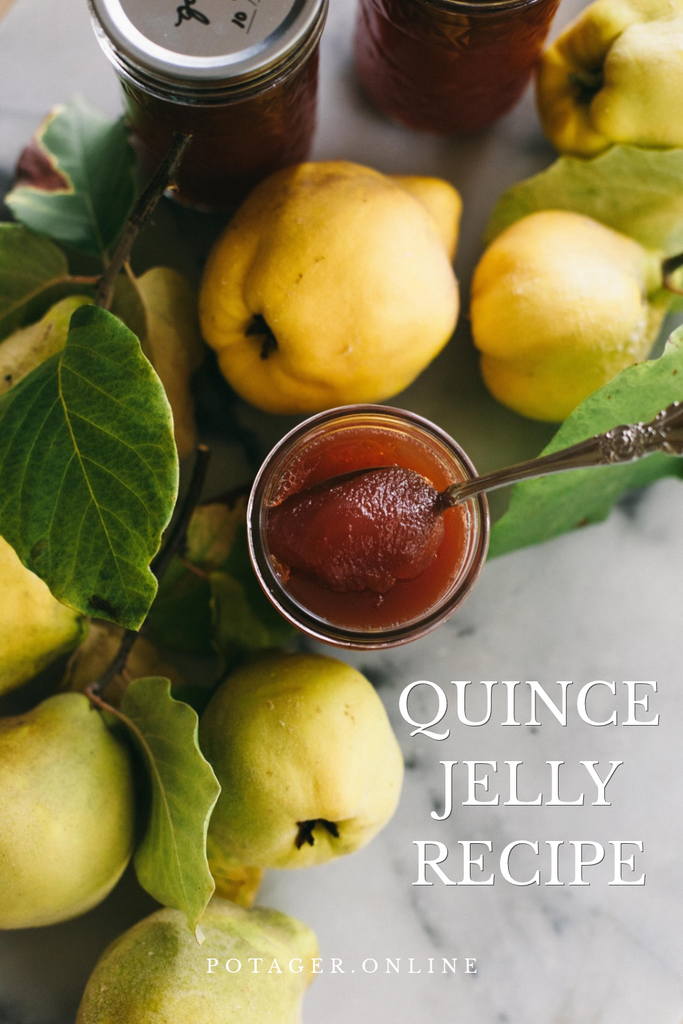
Pin this image and save the recipe to give a try as soon as you can get your hands on some quince.



Hi, I'm Kali.
Mama, farmer’s wife and the creator of the Potager book + blog. Follow along as we cook and garden the seasons, as well as fix up our little Swedish cottage in Oregon’s Willamette Valley.