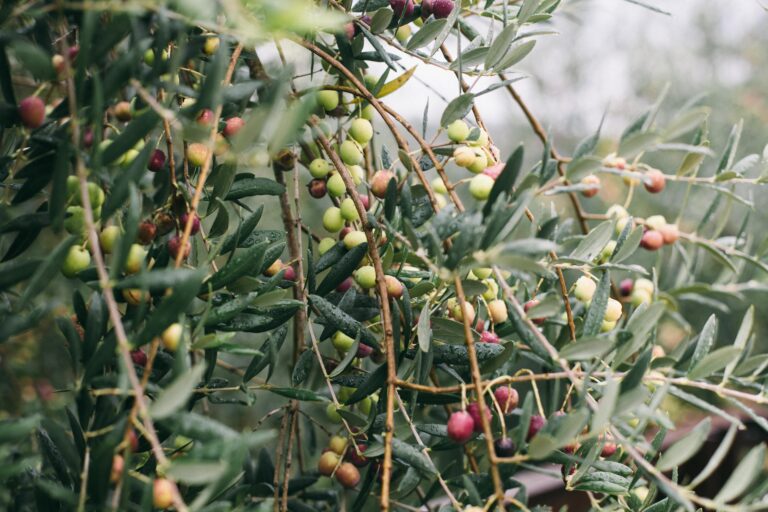
Over a decade ago, I was cooking for a beautiful French restaurant in Portland. Occasionally the chef would pack up the crew and a whole lot of food, and we’d find ourselves out on a farm somewhere. Or more often, setting up shop in a beautiful winery kitchen. More than one of these evenings was spent in the event space at Durant. A local winery, who had just embarked on the adventure of growing olives in Oregon. We were lucky enough to be one of the first restaurants cooking with and featuring their oils, and the idea completely fascinated me. Over the years, I’ve wondered how the farm has fared, and where their Oregon olive adventures have taken them.
Just a few weeks ago, on a Friday morning, my youngest son and I had snuggled up to watch our weekly YouTube videos. It’s a little tradition of ours, and always makes Fridays feel extra special. Starts the weekend off right. On that particular morning, we happened to watch a video made by Kylie Flavell, where she features a friend’s olive farm and mill in Tuscany. We had watched her video a few weeks earlier, where they harvested their own olives. Both my son and I were intrigued.
My mind instantly flashed back to that winery and olive farm I had catered at so many years before, and I quickly got online to check it out. We discovered that November happened to be their big olive harvest celebration, and you could book a free oil tasting and tour of the farm. We were sold! We booked our tour right then and there, and invited some good, food-loving friends to go with us.
Our tour guide was super knowledgeable, even though she claimed she was new to giving tours, she shared so many amazing stories and experiences from working at the farm. Our kids were riveted and asked lots of good questions. It’s always so fun to watch them wrap their minds around how our foods are grown. And even though we are an agricultural family who is lucky enough to see the process from start to finish each year, it’s still really cool to expose them to such vastly different crops.
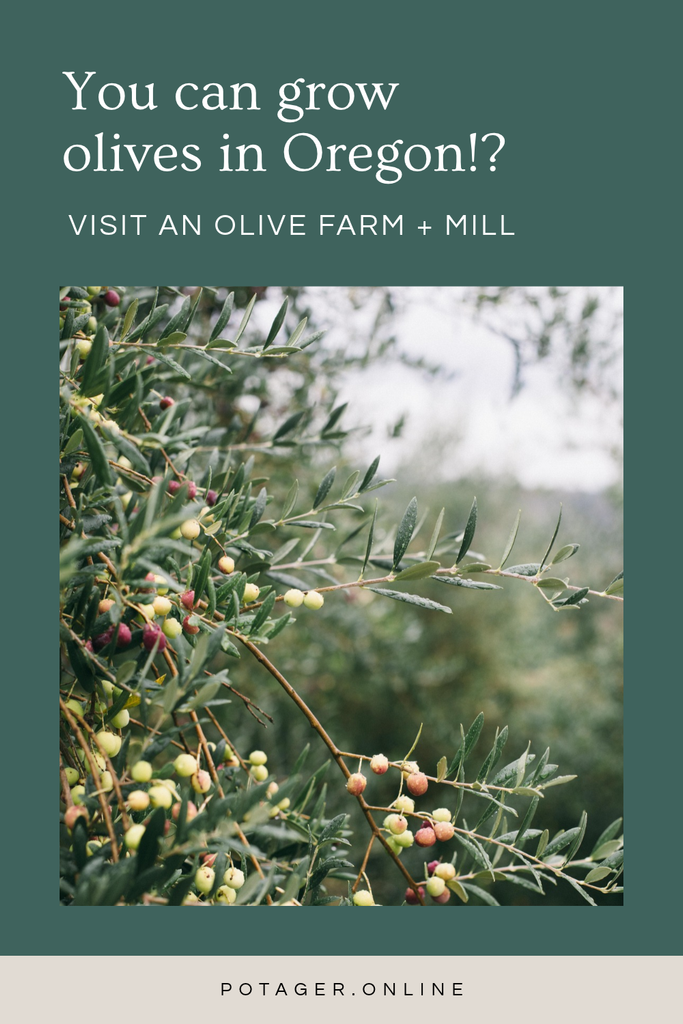
You can grow olives in Oregon?
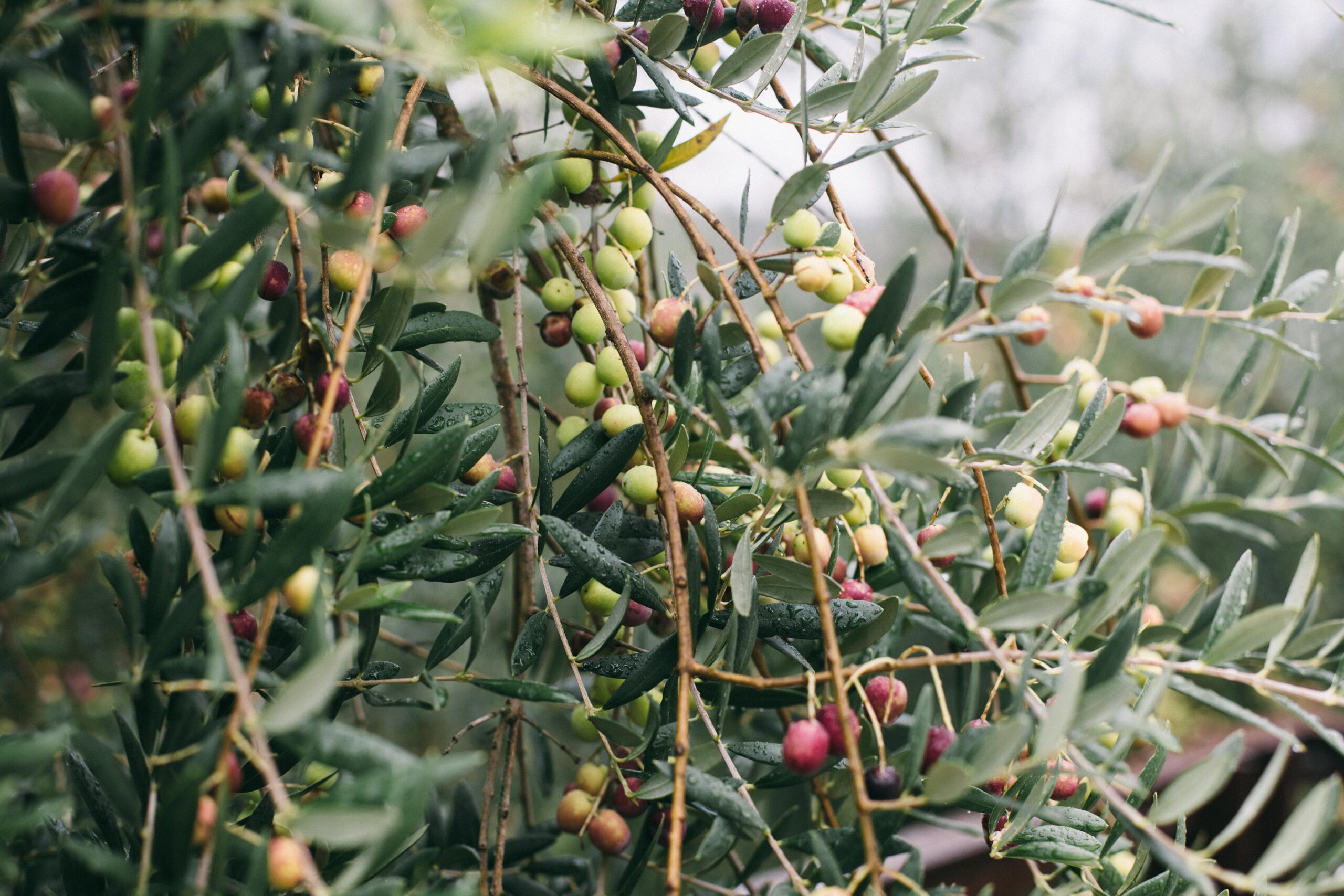
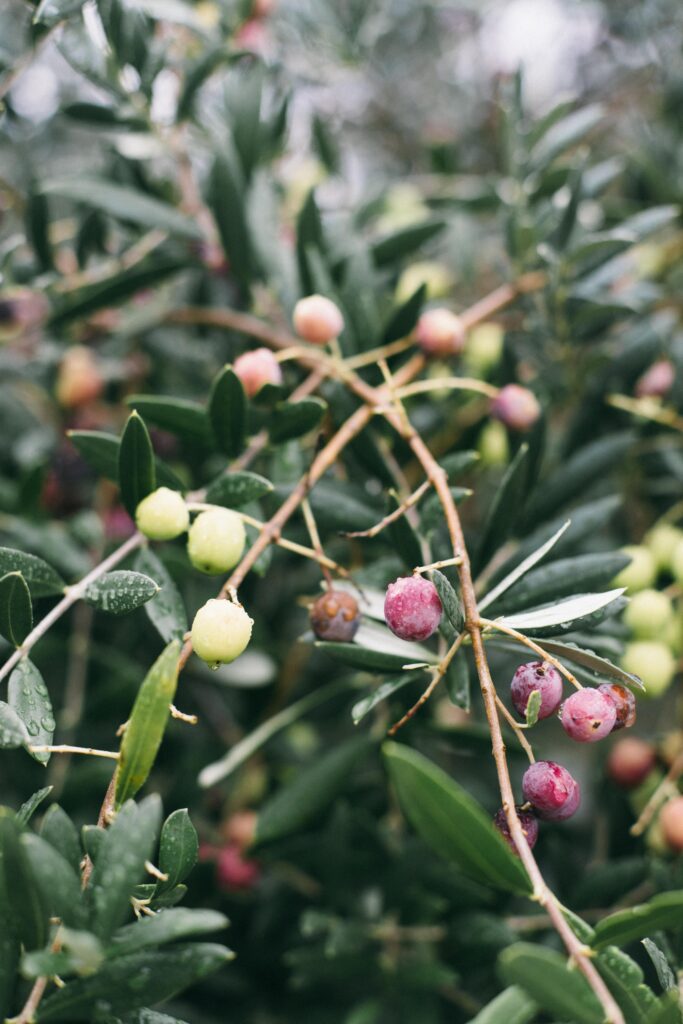
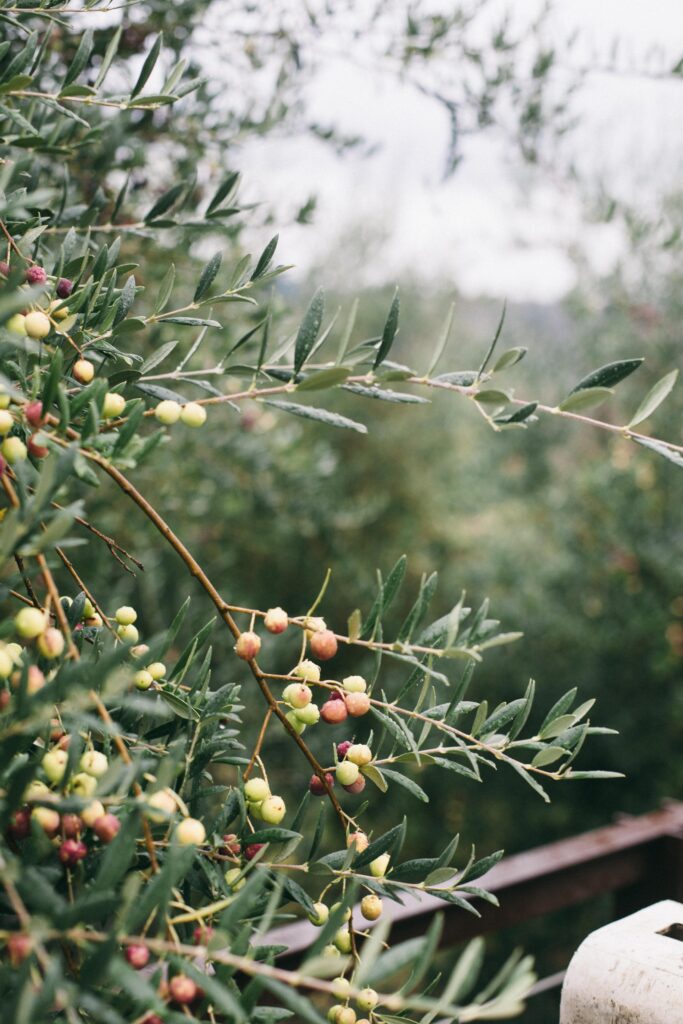
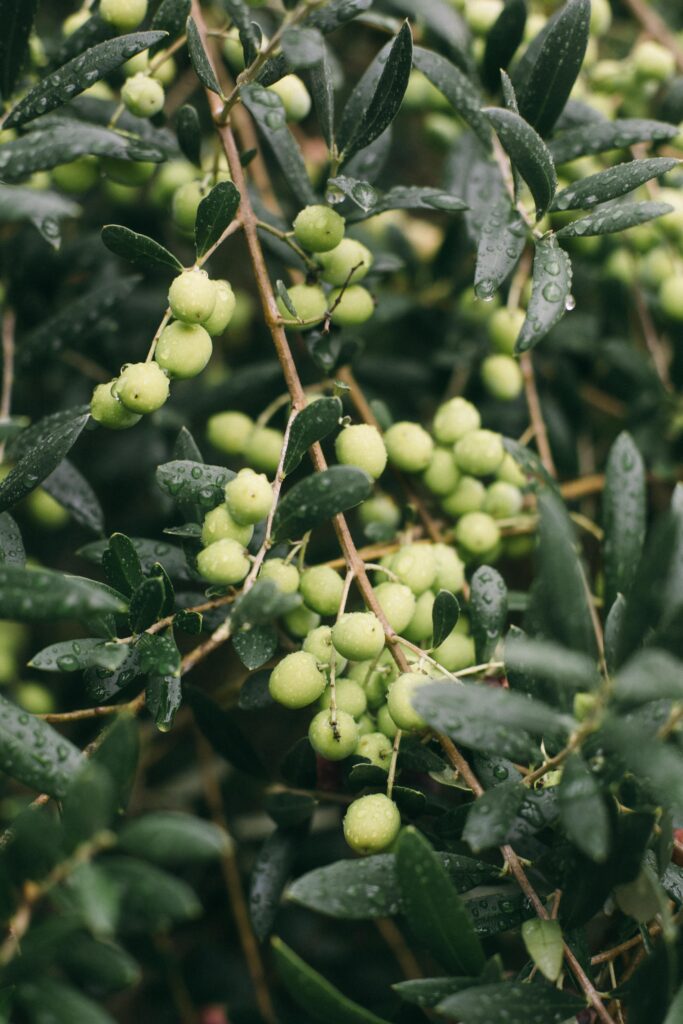
My first question upon learning someone was attempting to farm olives in Oregon was, “How?” How can you grow a crop that thrives in the sunny, warm Mediterranean, in cold, wet Oregon? Well, it definitely took the farm some time to figure it out. And some trial and error. Our tour guide mentioned that something like 2/3 of the trees the farm planted the first year died. They have truly learned by experimentation, finding varieties that not only survive in this climate, but can thrive. And doing so has created a truly unique end result. PNW olive oil has its own flavor profile, characteristics, and personality.
And not only do they grow olives for oil, the family has branched out (literally) to offering trees that thrive in the local climate. Durant has a nursery on site that offers Durant Select olive trees, promising their varieties will outlast even the coldest Oregon winter. You can see a list of their tree varieties here.
Why grow olives in the PNW?
The Durant family describes themselves as trailblazers. They took a chance way back when, before Oregon was even a wine hot spot, and planted some of the first Pinot Noir grapes in what is now Oregon’s famous wine country. Years later, inspired by Tuscany, and curious about other ways to utilize the fertile soil of the Dundee Hills, they began to experiment with olives.
Their goal has been to put as much in to their land as they take out. Modeling an old world mentality about their land and the love they put in and receive from it. I love this. This kind of generational thinking is so rare in our world.
When do they harvest olives?
Right now! October-November. Which was why it was so fun to go visit at this time. The olive harvest is currently happening, and some of the varieties of oil we tasted had just been pressed. Another unique thing about Oregon olives, is that due to the impending frost, olives are often picked earlier. This lends a fresher, greener, grassier taste to the oil, as opposed to oil made with olives picked at full ripeness.
How do you make olive oil?
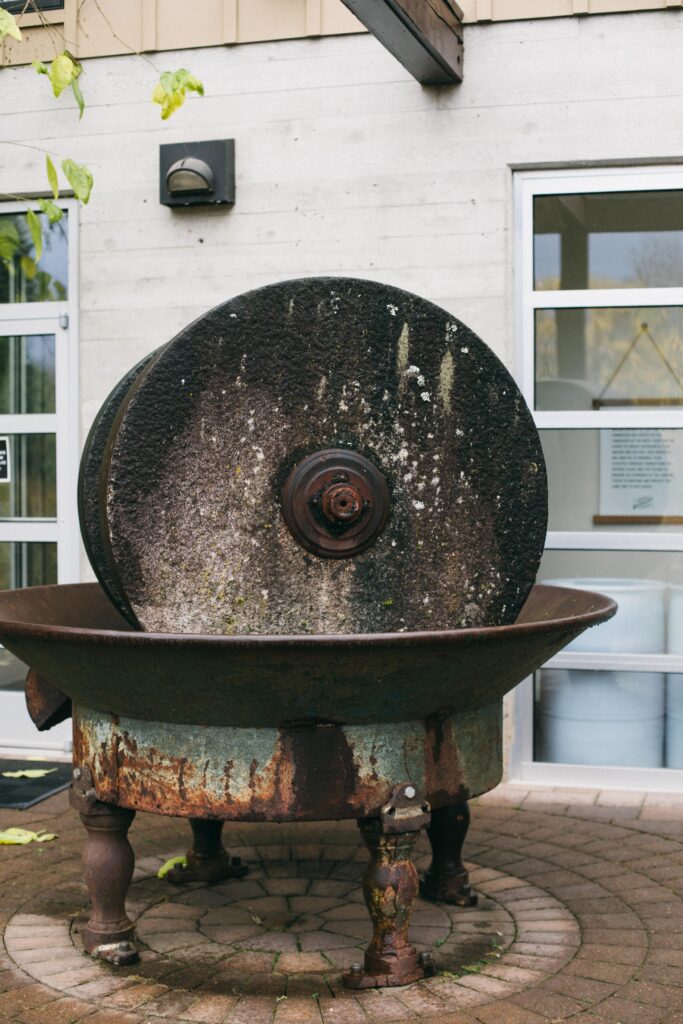
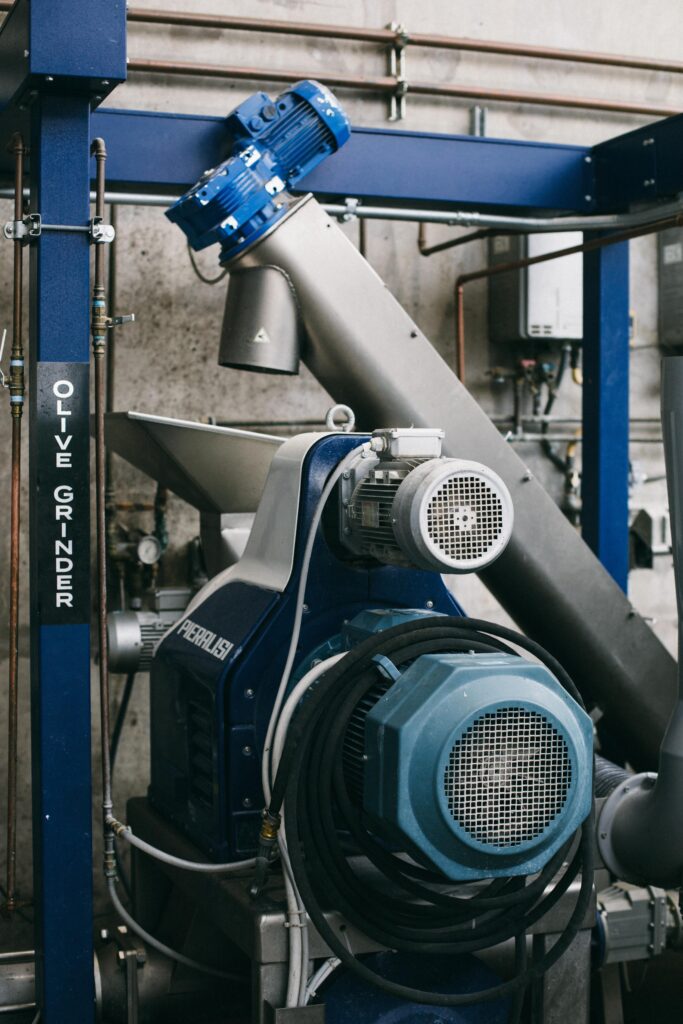
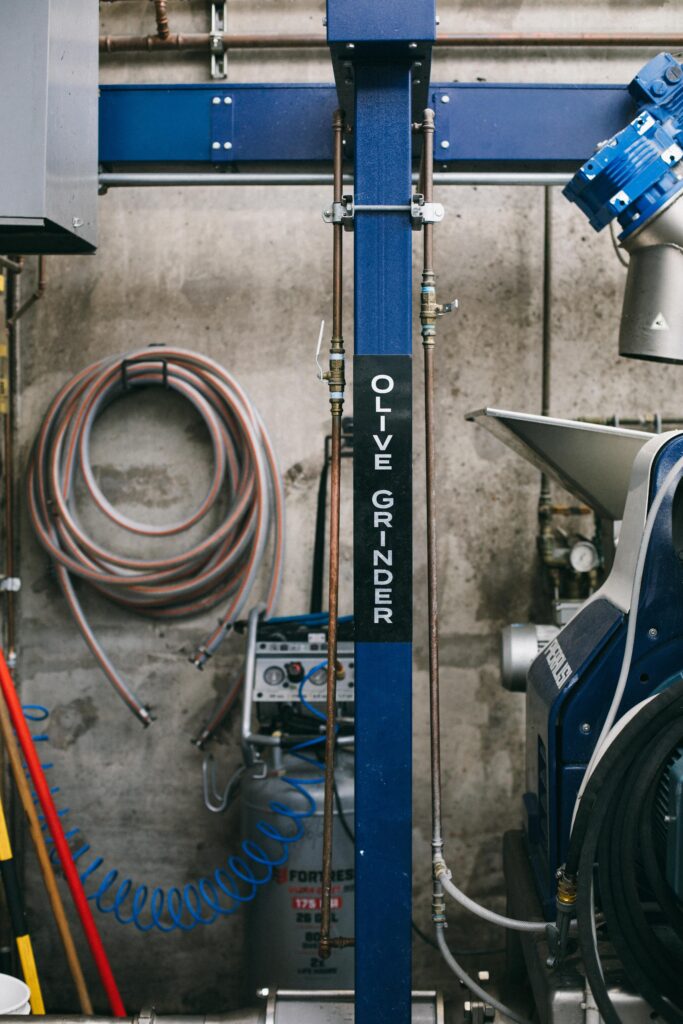
While the photo of the old stone mill up above is perfectly romantic, that’s not actually what the farm uses to process their olives anymore. Instead, they use this far more industrial looking machine, labeled “olive grinder,” up above. This all-in-one machine does most of the processing. Here are the steps they go through at Durant when they process their olives:
- Sorting and washing. Much like our berry harvesters, the olive processing machine utilizes both mechanical and manual methods to sort out debris. First the farmers dump the big crates of olives into a hopper that helps remove sticks and larger debris by shaking. Then the olives go into another sorting area, where a worker picks out most of the remaining contaminants. The olives are then thoroughly washed.
- Pulp and malaxation. Next the olives get dumped into a grinder (pictured above) and ground into a pulp. This part surprised me a bit. I guess I’d always pictured whole olives being pressed until the oil comes out, but it turns out, crushing them to release the oil and then mixing them into a paste– the process of malaxation– helps the oil droplets really blend together and creates unique flavor profiles.
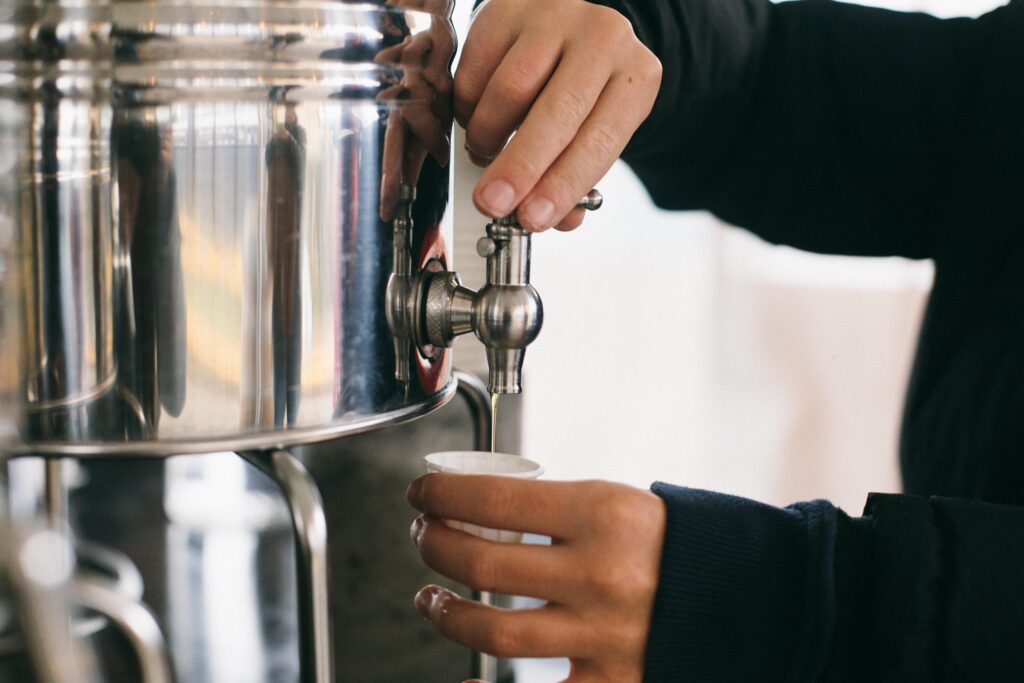
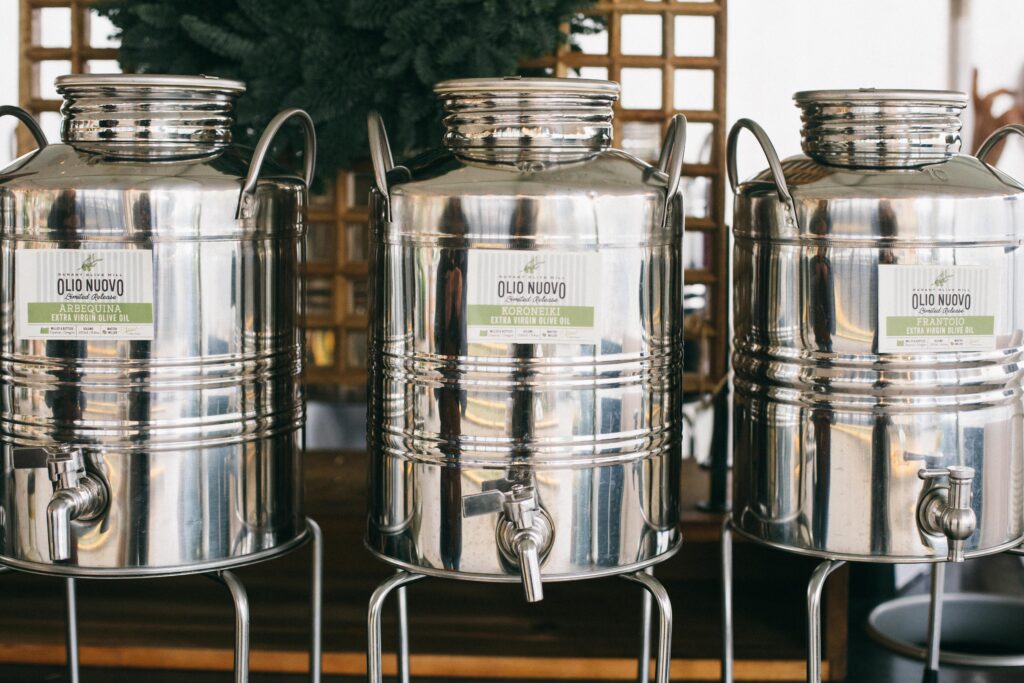
- Centrifugation, filtering, aging and bottling. Centrifugation is basically a fancy way of saying filtering. After malaxation, the olive paste is poured into a torpedo-shaped spinner– much like a salad spinner– which separates the oil from the solids. Olio Nuovo, or the first press “new oil” is taken at this stage. Fresh, vibrant and peppery. But any oil going on to be aged and bottled goes through a vertical filtration stage. Vertical filtration means that water and solids sink to the bottom, and the oil rises to the top. Once filtered, much like wine, the oil is stored in large vats until it is ready to be bottled. Bottling happens on-demand so you get the freshest oil possible.
Tasting the oil
Since we chose to visit in November, while Durant is hosting their annual Olio Nuovo festival, we were lucky enough to get to tour and taste all at once. There are tons of other activities you can do on the farm, not to mention a beautifully curated gift shop (and winery!), but it was a pretty cool, damp day when we were there, so a tour and tasting was plenty.
I was so curious to see how the kids would do with the tasting. Would they be grossed out by the idea of drinking oil? Would they make funny faces? Say funny things? My boys haven’t eaten a whole lot of olives in their life– I’m not a huge fan myself– and I wasn’t quite sure what to expect.
We did get them a baguette at the gift shop so they could try the oils and vinegars on something, but I was so impressed with how well they did and how seriously they took it. All three of them went down the line of oils, sharing what they liked or disliked about each type. Discussing the flavors they detected or noticed. “This one tastes like grass!” “I taste green apple!” They tried the aged, bottled oils, all types of the Olio Nuovo, the fused oils (not infused because of the process), and the wide variety of house-made vinegars. All with enthusiasm and gusto. It was SO fun!
Why is it important to visit farms?
This is something I’ve been thinking about a lot lately. My children are lucky enough to be exposed firsthand to agriculture, since my husband is a farmer. They get to see everything that goes into the fruit that people buy at the store. They see their dad lay sawdust in the fall to make the soil more acidic, they cruise around with him while he checks on pruners over winter, they run through the fields dodging honeybees as the bushes are in full blossom come spring, and they ride berry pickers into the sunset during the peak summer season.
But not everyone gets to experience this kind of thing. And we certainly don’t get to see it in regards to other crops or industries. I want our boys to understand that food doesn’t just come from the grocery store. I want them to see that there are real people behind every step of the process. And I want them to believe that someday, they can do the same thing if they want to. Farming is a hard and beautiful profession, often more like a calling, but I’d be proud to see them follow in their father’s footsteps. Stewarding the land and its fruit as best he can.
Leave a comment
Is this blowing your mind!? Olives! In Oregon!? Visiting an Oregon olive farm and mill was SUCH a cool experience, and if you are anywhere in the local area, I highly recommend heading up to Durant. Leave a comment below and let me know what you think! Would you like to see more agri-tourism type tours like this?
You can also pin this image to help get the word out about this amazing farm and product. Truly inspiring!




Hi, I'm Kali.
Mama, farmer’s wife and the creator of the Potager book + blog. Follow along as we cook and garden the seasons, as well as fix up our little Swedish cottage in Oregon’s Willamette Valley.